
Home / Products / Forgings
Closed-die, open-die forgings and rolled rings
A 718 valve-body forging and a rolled ring for a compressor both come off the same line. The heat number is marked on the part.
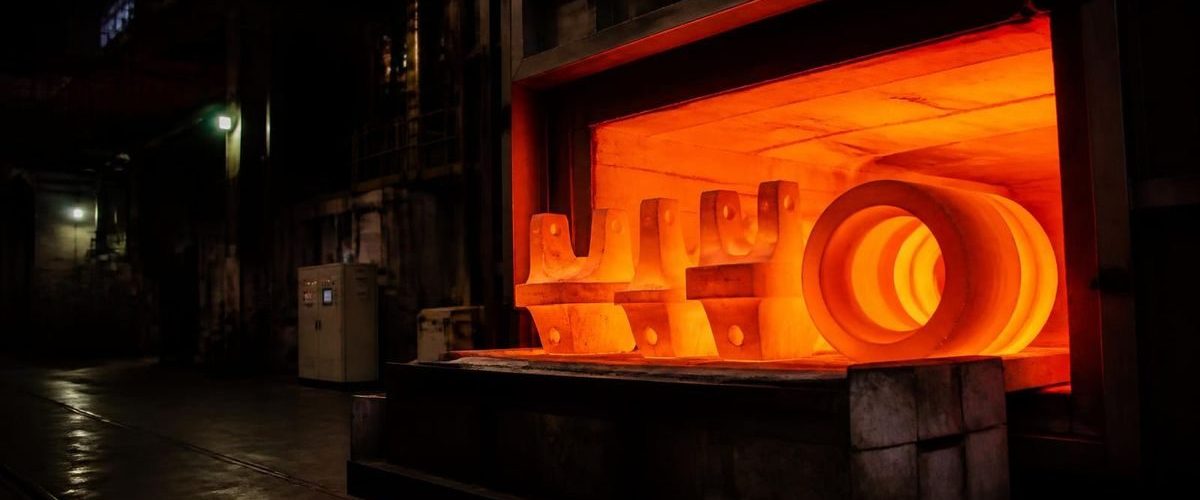
What comes off the line
| Form | Maximum size | Typical part |
|---|---|---|
| Closed-die forgings | To 300 kg | Valve bodies, fittings, structural parts |
| Open-die forgings | To 300 kg | Discs, shafts, blocks |
| Rolled rings | To 1,200 mm OD | Flanges, bearing races, seal rings |
| Flange blanks | To 1,200 mm OD | Pipeline and pressure-vessel flanges |
Why a forging rather than a machined block
Forging works the grain into the shape, so the finished part carries load along the grain instead of across it. A part machined out of plate cuts across that grain and wastes the material in the corners. For anything that has to carry load at temperature, the difference is not cosmetic.
The heat number on the part
The heat number is marked on the forging where the drawing allows it, and on the tag in every case. That is what lets a question about a specific part be answered from our own record rather than from the mill’s campaign sheet.
Where it is used
- Valve bodies and trim
- Compressor and turbine discs
- Flange and ring forgings
- High-temperature structural parts
- Pump and seal components
Where to read next
| Grades & composition | Which nickel grades, and what each is forged into. |
| Sizes & tolerances | Ring diameter, forging weight envelope, and the tolerance held. |
| Supply forms | As-forged, rough machined or finish machined. |
| Testing | UT, PT, tensile, hardness and grain size. |
| Ordering | The six details that produce a quotation. |
Request a quotation
Mailbox: info@alloyforgeworks.com
Answered within one working day, Monday to Friday.